Horta
Horta are the wild greens that Cretans gather from fields, olive groves and roadsides, then cook and dress with olive oil and lemon. The Greek name is τα χόρτα (pronounced "ta HOR-ta"), which means wild greens or green vegetables.
Gathering Horta
Gathering horta is a very traditional part of Cretan life. A walk through the olive groves or vineyards might reveal an old lady in a long skirt, shawl and thick black stockings, even in summer, bent over in a field or at the roadside gathering what looks like weeds.
The skills and knowledge of horta picking pass down the generations. There are 25 to 30 different herbs and plants that make up true horta, and picking, cleaning and preparing them can take the women of a village a full day. February and March are the months when horta are most plentiful.
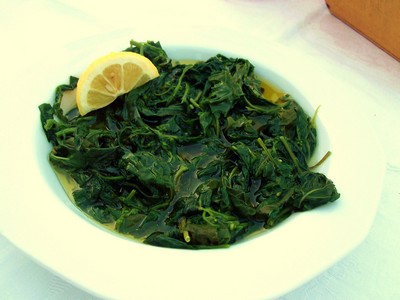 Horta with olive oil and lemon juice
Many of the plants grow in different, sometimes neighbouring, fields, so the women walk from meadow to meadow to find the varieties they want. Many families have their own names for different plants, and some of these names mean nothing to a family in the next village, or even next door.
Horta in the Cretan Diet
Horta play a vital role in the Cretan diet. Cretans have always made good use of the natural produce of their island, and our guide to the traditional Cretan diet explains where wild greens fit in. In wartime, wild greens, olive oil and bread made from chestnuts kept many Cretan families fed and alive.
What Goes into Horta
Horta are a mix of edible wild greens, and the mix depends on the season and on what grows nearby. A plate of horta can include black mustard leaves, dandelion or beet greens, curly endive, sorrel and spinach.
How to Cook Horta
Horta are cooked simply, by braising or steaming them in a little water. Follow these 3 steps:
- Wash the greens thoroughly, especially wild greens you have picked yourself.
- Braise or steam them in a little water until tender.
- Dress them with olive oil, lemon juice, salt and pepper.
Greens Pie
Greens pie is a Cretan pie filled with horta, and it appears on menus in many parts of Crete. More than 5 different green herbs can go into a traditional greens pie, although many restaurant versions use only spinach, which is not a bad substitute.
Traditional pies made by the women of a village are all different. The filo pastry is made by hand with olive oil, and lemon juice is added to make it especially crispy. The herbs add a tangy freshness, and a little mint brings out the flavour of the greens. Fennel leaves are another common addition, and our page on the herbs of Crete describes fennel and the other wild herbs Cretans cook with.
Want to discover even more of what Crete has to offer?
Explore hidden gems, must-visit spots, and insider tips below!