Moving to Crete
This Moving to Crete page is from the Living in Crete section of the Completely Crete website.
Rules and fees last checked: October 2026. Always confirm with the official source before you act.
If you’re thinking of moving to Crete, Greece which is a beautiful Greek Island, you’ll need to decide if it really is for you.


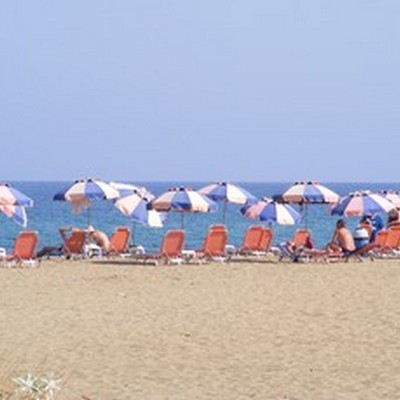
People want to move to Crete for all kinds of reasons.
- Wonderful Weather
- Brilliant Beaches
- Irresistible Resorts
- Spectacular Scenery
- Magnificent Mountains
- Gorgeous Gorges
- Warm-hearted People
- Fabulous Flora and Fauna
- Fantastic Fresh Food
- White Washed Villages
- Stress Free Lifestyle
Lots of expats love living in Crete either all year round as permanent residents or for part of the year in their holiday homes.
If you’ve yet to make your mind up about making the move to Crete and making a life for yourself here, then you’ll need to consider the paperwork first and the practical points after it.
Before You Move to Crete: A Post-Brexit Checklist
UK nationals moving to Crete now sort out 5 things before or soon after they arrive: a visa, a residence permit, health cover, a tax number and a driving licence. The checklist follows GOV.UK's Living in Greece guide, which GOV.UK last updated in March 2026.
- Apply for a Greek visa before you travel. Most people moving to Greece need a national (Type D) visa from the Greek consulate. Visits of up to 90 days in any 180-day period need no visa, but those 90 days cover the whole Schengen area.
- Register as a resident within 90 days of arrival. You register your address in person with your regional Hellenic Police branch and apply for a temporary residence permit. UK nationals who lived in Greece before 1 January 2021 hold the Engrafo Diamonis 18(4) residence document instead.
- Arrange health cover. You show proof of health cover for the visa and for residence. Residents get Greek state health care by paying Greek social insurance or by registering a UK S1 form, for example as a UK State Pensioner, and everyone else needs private health insurance.
- Get a Greek tax number (AFM). An AFM is needed to rent or buy a home, sign up for utilities and work. The application starts online on gov.gr, and you confirm your identity by video call or at a tax office.
- Exchange your UK driving licence. A UK licence lets you drive in Greece for up to 6 months. After 6 months of residence, GOV.UK says you should exchange it through the Greek government's UK driving licence conversion service.
Each step has more detail elsewhere on Completely Crete. Our guides to living in Crete and health care in Crete cover the residence rules, the AFM, the S1 form and EOPYY registration.
Moving to Crete to work
Are you going to work in Crete?
There is a lot to consider if you're going to find work in Crete. UK nationals who moved to Greece after 31 December 2020 need a visa or permit that allows work. You'll need to know about the legalities of working, being self employed, working for an employer, whether you'll be required to speak Greek and what's the current job market like.
For answers to these and other questions take a look through our Making a Living in Crete section. We’re sure you’ll find it interesting and informative.
Moving to Crete to start a business
Do you intend starting a business in Crete?
Greek bureaucracy has a bad reputation! But how justified is it? Particularly when wanting to start a business in Crete.
Essential reading for anyone considering this option is our fact filled Starting a Business in Crete section.
Moving to Crete with children
Have you got children in tow?
Whether you have babes in arms or full-grown teenagers you’ll need to consider their schooling and how they’ll fit into a foreign land.
See our Schools in Crete page for more information.
Bringing a pet to Crete
Will you bring Flossy or Fido?
If you are thinking of bringing pets into Crete, you will need to consider how they’ll get here. If you are moving to Crete and wanting to bring pets with you, consider the age, health and temperament of the animal.
See our Bringing Pets to Crete page for more information.
Buying a property in Crete
Will you buy or rent a property?
We have both bought a Crete property, (and sold it) and rented several properties when living in Crete. We strongly recommend that you consider renting a property first before taking the plunge and buying a property in Crete.
Renting for at least 12 months is the safest way to test life in Crete before you buy. Many people fall for Crete on sunny holidays, but a full year shows you the village, the location and the island in every season. After a year here, some people change their minds about the property, the area or even staying in Crete at all.
Finding a long-term rental in Crete is harder than finding a property to buy. In our experience, many estate agents have rental properties on their books but advertise them far less than their sales. Email each estate agent in the area you like and ask which properties they have to rent long term.
At the very least we advise you to look through our advice and information contained in Buying a Crete Property Guide and our fact filled Renting/Letting Section before making up your mind.
Speaking Greek
Can you speak Greek?
Trying to learn Greek is very difficult. Despite living in Crete, taking Greek language lessons and trying to learn through books and Greek language websites, many ex pats struggle with anything more that just the basics.
Frustratingly when we attempt to converse with the locals here in Crete in their mother tongue - they insist on practising their English on us!
Greek is one of the oldest languages in Europe, spoken for some 4,000 years. Learners face a new alphabet, complex grammar and a stress accent on every word. Putting the stress in the wrong place can change the meaning of a word completely.
Fluent Greek is essential for most jobs in Crete and for setting up a business. Tourism-related summer jobs are the main exception. Most other employers expect you to read, write and speak Greek fluently. We get by with a limited vocabulary because we do not need Greek for work.
Adults do not simply pick Greek up, and learning takes real effort. Children are the exception, and many speak Greek fluently within about 6 months of living in Crete. Many Cretans speak some English, and almost all Cretan children take private English lessons on top of their school lessons.
It's worth at least trying to learn some Greek, though, because even a few words are much appreciated.
Relocating to Crete
What will you bring with you?
and
How will you get here?
Flying or driving? Bring everything? Bring nothing? Tough choices, and sometimes costly ones too, for potential relocators.
For information and advice on how to get here and what to bring see our Relocating to Crete page.
Want to discover even more of what Crete has to offer?
Explore hidden gems, must-visit spots, and insider tips below!